









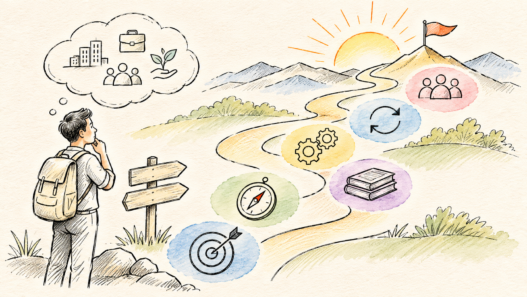




Your circumstances may change, your achievements may fluctuate, and other people’s opinions may shift, but your inherent worth remains unchanged.
There are moments in life when circumstances cause us to question our value. Perhaps you have worked diligently for years without receiving the recognition you deserve. Maybe you have experienced a painful rejection, made a mistake that affected your confidence, or found yourself navigating a difficult season that has left you wondering whether you are truly capable of achieving your dreams. During such moments, it can become easy to confuse what has happened to us with who we are.
We live in a world that frequently measures people by their accomplishments, professional titles, financial resources, educational qualifications, and public recognition. From an early age, many of us learn to associate success with personal worth. We celebrate those who achieve extraordinary things, admire individuals who occupy influential positions, and sometimes unconsciously assume that people who have experienced failure are somehow less valuable.
Yet one of the most liberating truths we can embrace is that our worth as human beings is not determined by the circumstances of our lives. Our value does not increase when we receive a promotion, nor does it diminish when we experience rejection. It is not established by the approval of others, and it cannot be erased by mistakes, disappointments, or temporary setbacks.
You were valuable before you achieved anything the world considers impressive, and you remain valuable even when life does not unfold according to your expectations.
Understanding this truth can transform how we approach our careers, relationships, personal development, and the inevitable challenges that accompany the human experience.
Your Circumstances Do Not Determine Your Worth
Imagine holding a crisp one-hundred-dollar bill in your hand. Its value is immediately recognizable, and most people would gladly accept it. Now imagine crumpling that same bill, dropping it on the floor, or allowing it to become dirty and worn. Although its physical appearance has changed, its monetary value remains the same, provided it is still genuine and recognizable.
The bill does not become less valuable simply because it has been handled roughly or exposed to difficult conditions.
This simple illustration offers a powerful lesson about human dignity. Life has a way of leaving us feeling emotionally crumpled. Disappointments can weaken our confidence, criticism can affect our self-perception, and unexpected challenges can make us question our abilities. Sometimes, the experiences we endure leave marks that take considerable time to heal.
Yet those experiences do not reduce our inherent worth.
Consider a diamond buried beneath layers of dirt. Its beauty may be hidden from view, but its underlying qualities remain. The surrounding soil does not determine what the diamond is. In much the same way, your potential and dignity do not disappear simply because your present circumstances make them difficult to recognize.
Think also about a magnificent painting that has been stained or damaged. The damage may require attention and restoration, but it does not erase the artist’s original creativity or the significance of the work.
These illustrations remind us that appearance, circumstances, and temporary conditions should never be confused with fundamental value.
You may be going through a difficult season, but you are not a lesser person because of it.
Failure Is an Experience, Not an Identity
One of the most damaging habits we can develop is allowing our failures to become labels that define us. Instead of acknowledging that we failed at a particular task, we begin describing ourselves as failures. Rather than recognizing that an opportunity did not work out, we conclude that we are incapable of succeeding.
This distinction may appear small, but its consequences can be profound.
Failure is an event or outcome. It provides information about what happened in a particular situation. It may reveal a gap in our preparation, an ineffective strategy, circumstances beyond our control, or a combination of factors that influenced the result. Our identity, however, encompasses far more than any single experience.
A professional who is unsuccessful in an interview is not automatically an incompetent person. An entrepreneur whose business closes has not necessarily lost the ability to create something meaningful in the future. A student who struggles academically is not without intelligence or potential. Likewise, a leader who makes a poor decision does not have to remain permanently defined by that mistake.
Of course, recognizing our inherent worth does not mean avoiding responsibility. We must be willing to acknowledge errors, accept constructive criticism, make necessary corrections, and learn from our experiences. Personal growth requires honesty about the areas in which we need improvement.
However, accountability should never be confused with self-condemnation. We can recognize that a decision was wrong without concluding that we are worthless. We can acknowledge that our performance needs improvement without believing that our future has been permanently damaged.
The healthiest response to failure is neither denial nor despair. It is the willingness to learn, adjust, and move forward while maintaining a balanced understanding of our value.
You can fail at something without becoming a failure. Your mistakes may teach you important lessons, but they do not possess the authority to erase your worth.
Rejection Does Not Mean You Are Inadequate
Few experiences challenge our confidence as directly as rejection. Whether it occurs in our careers, relationships, education, or personal pursuits, rejection can create a painful sense of not being wanted, appreciated, or considered good enough.
Perhaps you prepared extensively for a job interview, only to receive a message informing you that another candidate had been selected. Maybe you worked tirelessly toward a promotion but were overlooked. You may have shared an idea that was dismissed, applied for a scholarship that was awarded to someone else, or experienced the disappointment of a relationship that did not develop as you had hoped.
When these experiences occur repeatedly, it is tempting to interpret them as evidence that something is fundamentally wrong with us.
However, rejection often reflects a particular decision made within a specific context. Employers consider organizational needs, qualifications, budgets, and competing candidates. Relationships involve personal compatibility, expectations, and circumstances. Opportunities are influenced by numerous factors, many of which remain outside our control.
A decision not to select you does not provide a complete assessment of your abilities, character, or potential.
This does not mean that every rejection should be dismissed without reflection. Sometimes, rejection provides valuable information that can help us improve our preparation, communication, or approach. We should remain willing to learn from feedback and make constructive changes where necessary.
Nevertheless, we must resist the temptation to allow someone else’s decision to become the final verdict on our identity.
Your value does not depend on being chosen by every employer, accepted by every institution, admired by every colleague, or approved by every person you encounter.
You can respect the decisions of others without surrendering your confidence in your own dignity and potential.
Your Professional Title Is Not Your Personal Identity
In professional environments, it is easy to become deeply attached to our roles and accomplishments. Our titles often influence how others perceive us, the responsibilities we carry, and the opportunities available to us. Over time, we may begin to associate our professional positions with our personal significance.
There is nothing wrong with taking pride in our work or celebrating career achievements. Professional growth can be deeply rewarding, and meaningful accomplishments deserve recognition. The challenge arises when our entire sense of worth becomes dependent on maintaining a particular position, level of influence, or public image.
Consider what happens when someone loses a job, experiences an unexpected organizational restructuring, or transitions out of a leadership role. If their identity has been built exclusively around professional status, the change can create a profound sense of personal loss.
Yet a job title describes a responsibility, not the totality of a human being.
You are more than the position you occupy. You are more than your salary, your professional network, your educational credentials, or the authority you exercise. Your character, relationships, experiences, values, and capacity to contribute meaningfully to the lives of others extend far beyond any organizational designation.
The title you hold today may eventually belong to someone else, but your inherent dignity remains your own.
This understanding can also make us better leaders. When we recognize that our worth is not dependent on status, we become less threatened by the success of others and more willing to create opportunities for those around us. We can celebrate another person’s achievements without interpreting them as a reduction in our own significance.
Leadership becomes healthier when it is grounded in character and service rather than the constant need for external validation.
Stop Allowing External Approval to Determine Your Value
Human beings naturally desire acceptance, appreciation, and belonging. Encouragement from others can strengthen our confidence, and constructive recognition can motivate us to continue improving. However, when our sense of worth depends entirely on external approval, we place our emotional well-being in the hands of circumstances and opinions we cannot control.
People’s perceptions are often influenced by their own experiences, expectations, preferences, and limitations. Someone may admire your abilities today and criticize your decisions tomorrow. A colleague may appreciate your contributions while another overlooks them. An opportunity may be available in one environment but unavailable in another.
If your confidence rises and falls with every opinion, compliment, criticism, or rejection, maintaining a stable sense of identity becomes extremely difficult.
Developing healthy self-worth requires learning to distinguish between useful feedback and judgments that should not determine how we see ourselves.
Constructive criticism can help us identify areas for growth, but it should not lead us to question our basic dignity. Recognition can encourage us, but it should not become the foundation of our identity. Likewise, disagreement does not automatically mean disrespect, and another person’s inability to recognize our strengths does not make those strengths disappear.
You can remain humble, teachable, and open to correction without allowing the opinions of others to define your worth.
External approval may affirm your contributions, but it does not create your value.
You Are Already Valuable, Even While You Are Still Growing
One of the most important distinctions in personal development is the difference between worth and growth.
Your worth is inherent. Your growth is ongoing.
You do not need to become a perfect professional, an exceptional leader, a successful entrepreneur, or a highly accomplished individual before you deserve dignity and respect. At the same time, recognizing your value does not mean you have reached the limits of your potential.
You can be valuable and still have weaknesses to address. You can possess dignity while needing to develop new skills. You can be worthy of respect while learning to make better decisions. You can appreciate who you are today while remaining committed to becoming a wiser, more capable, and more compassionate person tomorrow.
This perspective is particularly meaningful when viewed through the lens of faith. Genesis 1:27 teaches that human beings are created in the image of God. This biblical foundation reminds us that human dignity is not something we earn through professional achievement or social recognition. It is rooted in our identity as people created by God.
Psalm 139:14 also expresses gratitude for the wonder of God’s creation, offering a beautiful reminder that human life carries significance beyond the measures society commonly uses to evaluate success.
For me, these truths reinforce an essential principle: we should pursue excellence because our lives have value, not because we must achieve excellence in order to become valuable.
Personal development should be motivated by a desire to use our abilities meaningfully, serve others, and fulfil our responsibilities, rather than by the fear that we are inadequate unless we achieve more.
You are not trying to become worthy of dignity. You are learning how to live with confidence in the worth you already possess.
Five Practical Ways to Strengthen Your Sense of Self-Worth
Understanding our inherent value is important, but translating that understanding into everyday behaviour requires intentional effort. Our thoughts, habits, relationships, and decisions can either reinforce a healthy sense of self-worth or gradually undermine it.
The following practices can help you develop greater confidence while remaining grounded in humility and personal responsibility.
1. Speak to Yourself With Respect
Pay attention to the language you use when reflecting on your mistakes, disappointments, and limitations. If you constantly describe yourself as incapable, foolish, or inadequate, those messages can gradually influence how you approach future opportunities.
Instead, practice speaking to yourself with the same honesty and compassion you would offer someone you genuinely respect. Acknowledge what went wrong, identify what needs improvement, and remind yourself that one experience does not define your entire life.
You might begin with a simple affirmation: “My value is non-negotiable. I can learn from my mistakes, improve my abilities, and continue growing without questioning my worth.”
Healthy self-talk is not about pretending that everything is perfect. It is about refusing to use your imperfections as evidence that you are without value.
2. Carry Yourself With Confidence and Humility
There will be moments when you enter rooms where you feel less experienced, less qualified, or less accomplished than the people around you. Such environments can be intimidating, particularly when you are pursuing new responsibilities or stepping beyond familiar territory.
Remember that you do not need to know everything in order to make a meaningful contribution. You can acknowledge your limitations while remaining confident in your ability to learn, collaborate, and offer valuable perspectives.
Confidence does not require arrogance. It involves recognizing your strengths, understanding your responsibilities, and approaching opportunities with a willingness to contribute and grow.
Walk into the room with dignity. Listen carefully, ask thoughtful questions, and participate when you have something meaningful to offer.
You do not need to diminish yourself to demonstrate humility.
3. Establish Healthy Boundaries Without Unnecessary Guilt
A healthy sense of self-worth also influences how we allow others to treat us. When we constantly seek approval, we may become reluctant to disagree, decline unreasonable requests, or communicate our needs.
Over time, this can lead to exhaustion, resentment, and relationships that lack mutual respect.
Learning to establish appropriate boundaries is an important part of personal and professional well-being. It means recognizing that your time, energy, responsibilities, and emotional health deserve thoughtful consideration.
Saying no to an unreasonable request does not automatically make you selfish. Expressing a respectful disagreement does not make you difficult. Protecting time for rest, family, and personal development does not mean you lack ambition.
Healthy boundaries allow us to serve others more sustainably while maintaining respect for ourselves.
4. Replace Fear-Based Thinking With Faith and Purpose
Fear can be a powerful influence on our decisions. We may avoid applying for opportunities because we anticipate rejection, remain silent because we fear criticism, or abandon meaningful goals because previous attempts were unsuccessful.
Although fear is a natural human response, it should not always determine the direction of our lives.
Faith encourages us to recognize that uncertainty does not eliminate possibility. We can acknowledge risks, prepare responsibly, and still move forward with courage.
Instead of asking only, “What if I fail?” consider asking, “What might I learn, contribute, or accomplish if I take this step?”
This shift in perspective does not guarantee success, but it can help us approach opportunities with greater confidence and resilience.
Do not allow fear to become the author of your future when faith, wisdom, and preparation can help you move forward.
5. Give Yourself Permission to Dream Bigger
Sometimes, the greatest limitation we face is not a lack of opportunity but a deeply rooted belief that we are not capable or deserving of pursuing something meaningful.
Past disappointments may cause us to lower our expectations. Negative experiences may convince us to remain in familiar environments even when we possess the ability to grow. We may begin rejecting ourselves before anyone else has the opportunity to consider what we can offer.
Recognizing your worth means allowing yourself to pursue meaningful aspirations without requiring perfection as a prerequisite.
Apply for the opportunity that aligns with your abilities and interests. Develop the skills necessary for greater responsibility. Explore the possibility of further education, entrepreneurship, mentorship, or leadership. Seek guidance, prepare diligently, and remain willing to learn.
Dreaming bigger does not mean assuming that every ambition will be fulfilled exactly as imagined. It means refusing to allow an unhealthy sense of inadequacy to prevent you from exploring your potential.
You are already worthy of dignity, and you are still capable of meaningful growth.
The Freedom That Comes From Knowing Your Worth
When we develop a stable understanding of our value, something important begins to change. We become less dependent on constant approval and more willing to make decisions that reflect our principles. We can celebrate success without becoming consumed by pride and acknowledge failure without surrendering to shame.
We also become better equipped to support others. People who understand their own worth do not need to diminish others in order to feel significant. They can recognize another person’s strengths, celebrate achievements, and offer encouragement without viewing every interaction as a competition.
In leadership, this perspective can create healthier workplaces. Leaders who recognize the dignity of every individual are more likely to approach correction with respect, provide opportunities for development, and avoid reducing people to performance statistics or professional titles.
In our personal relationships, it can help us develop stronger boundaries, communicate more honestly, and seek connections grounded in mutual respect.
Most importantly, it allows us to approach personal growth from a place of possibility rather than inadequacy.
We no longer need to spend our lives trying to prove that we deserve to exist, contribute, or be respected. Instead, we can focus our energy on becoming more responsible, compassionate, capable, and purposeful in the ways we live and serve.
A Final Word of Encouragement
My friend, whatever you are facing today, I want you to remember that your worth has not disappeared.
If you are feeling unappreciated at work, you are still valuable. If you have experienced rejection, your dignity remains intact. If you are struggling through a difficult season, your circumstances do not erase your potential. If you have made mistakes, you can accept responsibility, learn, and begin again without surrendering your sense of self-worth.
You may have been overlooked, but you are not insignificant. You may have experienced failure, but you are not a failure. You may be carrying emotional wounds, but those wounds do not define the totality of who you are.
Like a crumpled banknote that retains its value, your inherent worth remains even when life has treated you roughly. Like a diamond hidden beneath the soil, your value does not depend on whether everyone recognizes it. And like a masterpiece undergoing restoration, your life can continue to possess beauty and meaning while you are still growing.
Do not confuse your present circumstances with your permanent identity. Do not allow rejection to convince you that you are inadequate. Do not permit mistakes to become the measure of your destiny.
You are not becoming valuable. You are discovering the value you have possessed all along.
Continue learning, continue growing, and continue pursuing the opportunities that align with your gifts, values, and purpose. Speak to yourself with respect, establish healthy boundaries, and approach the future with courage.
Above all, remember that your worth is not something the world has the authority to grant or withdraw.
Your value is intrinsic. Your dignity is permanent. Your worth is non-negotiable.
You are already enough to deserve respect and dignity, and you are still capable of becoming more than you can presently imagine.
Go forward with confidence, embrace your God-given worth, and continue growing into the person you were created to become.
With love, faith, and encouragement,
Dr. Ray
If this message encouraged you, share it with someone who may be struggling with rejection, self-doubt, or feelings of inadequacy. Sometimes, a simple reminder of their worth can help someone find the courage to begin again.